Vibrio cholerae (Cholera): Pathophysiology, Diagnosis, and WHO-Recommended Treatment
On this page
✅ First-line (WHO / CDC guidelines)
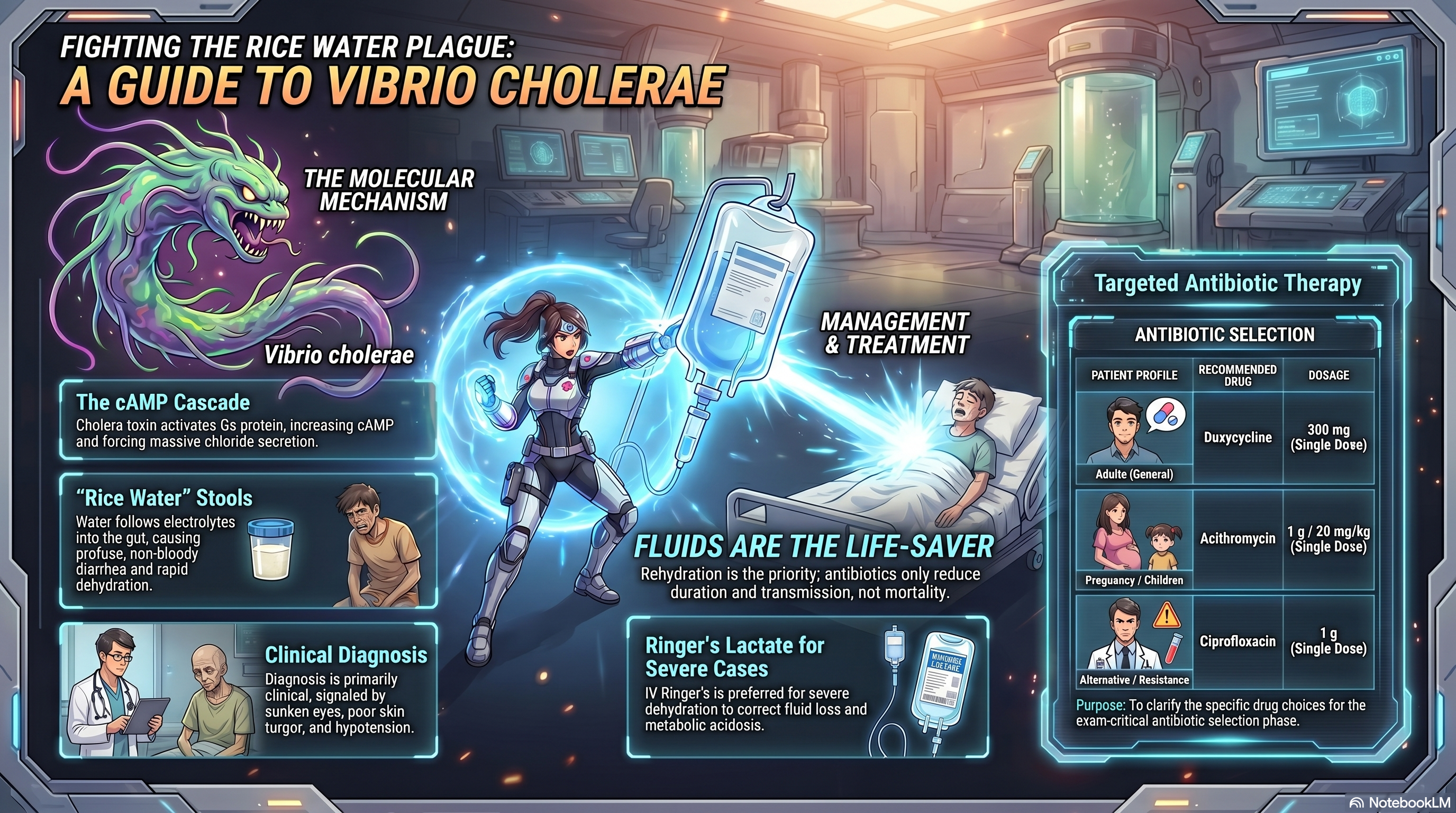
1. Doxycycline (preferred in adults)
- Doxycycline (300 mg), single dose, po
- ✔️ First-line in adults
- ✔️ Reduces duration of diarrhea and bacterial shedding
2. Azithromycin (preferred in children & pregnant women)
- Azithromycin (1 g), single dose, po (adult)
- Children: 20 mg/kg single dose
- ✔️ Safe in pregnancy
- ✔️ Good for areas with tetracycline resistance
3. Ciprofloxacin (alternative)
- Ciprofloxacin (1 g), single dose, po OR
- Ciprofloxacin (500 mg), 1×2 po, for 3 days
- ⚠️ Resistance common in many regions → not always first choice
❌ Not preferred
- Ampicillin / TMP-SMX → high resistance
- Routine antibiotics in mild cases → not always necessary
⚡ Clinical Pearls (High-Yield for Exam)
- 💧 Most important treatment = ORS or IV fluids
- Antibiotics:
- ↓ stool volume
- ↓ duration
- ↓ transmission
- Severe dehydration → IV Ringer’s lactate FIRST, then antibiotics
🧠 Easy Mnemonic
“Cholera → DOA”
- Doxycycline
- Oral rehydration
- Azithromycin
📌 Exam Trap
Even though rehydration is the main treatment: 👉 But in your exam, it will ask you about the antibiotic choice
Answer:
- Adults → Doxycycline (300 mg) single dose po
- Pregnancy / children → Azithromycin (1 g) single dose po
1. Pathophysiology (How cholera causes disease)
🧬 Organism
- Vibrio cholerae = Gram-negative, comma-shaped, motile bacteria
- Transmitted via the fecal–oral route (contaminated water/food)
⚙️ Mechanism of Disease (Core concept you MUST understand)
Step-by-step:
1. Colonization
- Bacteria survive gastric acid → reach the small intestine
- Attach to the intestinal mucosa (non-invasive)
2. Cholera toxin production
- Produces cholera toxin (CTX)
- This is the KEY virulence factor
3. Cellular mechanism (High-yield)
- Toxin activates:👉 Gs protein → ↑ adenylate cyclase → ↑ cAMP
- Result:
- ↑ Chloride secretion (CFTR channel)
- ↓ Sodium absorption
- Water follows electrolytes → massive fluid loss
💧 Clinical effect
- Profuse watery diarrhea (“rice water stool”)
- Rapid dehydration
- Electrolyte imbalance:
- ↓ K⁺ → muscle weakness
- ↓ HCO₃⁻ → metabolic acidosis
🧠 Easy memory:
👉 “Cholera = cAMP disease → Cl⁻ secretion → Water loss”
2. Diagnosis
🩺 Clinical diagnosis (MOST IMPORTANT in real life)
- Sudden onset:
- Profuse watery diarrhea
- No blood, no pus
- Severe dehydration:
- Sunken eyes
- Poor skin turgor
- Hypotension, tachycardia
👉 In endemic/outbreak setting → clinical diagnosis is enough
🔬 Laboratory diagnosis
1. Stool examination
- Dark-field microscopy → darting motility
- Stool culture:
- TCBS agar → yellow colonies
2. Rapid tests
- Dipstick antigen tests (used in outbreaks)
3. Labs for severity
- Electrolytes:
- Hyponatremia / hypokalemia
- ABG:
- Metabolic acidosis
- Hemoconcentration (↑ hematocrit)
🧠 Exam pearl
👉 Diagnosis is mainly clinical + dehydration assessment👉 Labs confirm but do not delay treatment
3. Management
⚠️ GOLDEN RULE
👉 Rehydration = life-saving treatment👉 Antibiotics = adjunct
Step 1: Decide OPD vs IPD
OPD (mild–moderate dehydration)
- Oral rehydration solution (ORS)
IPD (severe dehydration)
- Shock, lethargy, unable to drink → ADMIT
Step 2: Rehydration therapy
Severe dehydration (IPD)
- Ringer’s lactate (IV)
- 30 mL/kg in 30 min
- then 70 mL/kg in 2.5 hr
Mild–moderate
- ORS
- 75 mL/kg over 4 hours
Why Ringer’s lactate?
- Contains bicarbonate precursor → corrects metabolic acidosis
Step 3: Antibiotics (Adjunct therapy)
✅ First-line (WHO / CDC)
Adults:
- Doxycycline (300 mg), single dose, po
Pregnancy / Children:
- Azithromycin (1 g), single dose, po
Alternatives:
- Ciprofloxacin (500 mg), 1×2 po, for 3 days
❌ Not recommended:
- Routine antibiotics in mild cases
- Ampicillin / TMP-SMX → resistance
🎯 Why antibiotics?
- ↓ duration of diarrhea
- ↓ stool volume
- ↓ transmission
👉 but NOT life-saving (fluids are!)
Step 4: Electrolyte correction
- Potassium replacement (if hypokalemia)
- Monitor Na⁺, HCO₃⁻
Step 5: Monitoring
- Vital signs
- Urine output
- Hydration status
Complications
- Hypovolemic shock
- Acute kidney injury (AKI)
- Severe metabolic acidosis
- Death (if untreated)
Exam Summary (Ultra-high yield)
| Topic | Key Point |
| Pathophysiology | ↑ cAMP → Cl⁻ secretion → watery diarrhea |
| Diagnosis | Clinical (rice-water stool + dehydration) |
| Treatment priority | 💧 Fluids FIRST |
| Antibiotic | Doxycycline (adult), Azithromycin (pregnancy) |
🎯 Final Clinical Pearl
👉 “The patient does NOT die from infection — they die from dehydration.”
0